Extreme precision is often required in modern manufacturing on incredibly resistant materials.
Cutting techniques that produced excellent results fifty years ago are no longer acceptable.
Modern technology has been established to satisfy the demands of contemporary industrial cutting.
Laser cutting is one of the best cutting techniques available today.
It has attracted a lot of interest and is utilized in many different sectors.
Professionals unfamiliar with the technology are curious about what laser cutting is and how it works.
This article will discuss laser cutting and its techniques in detail.
What is Laser Cutting?
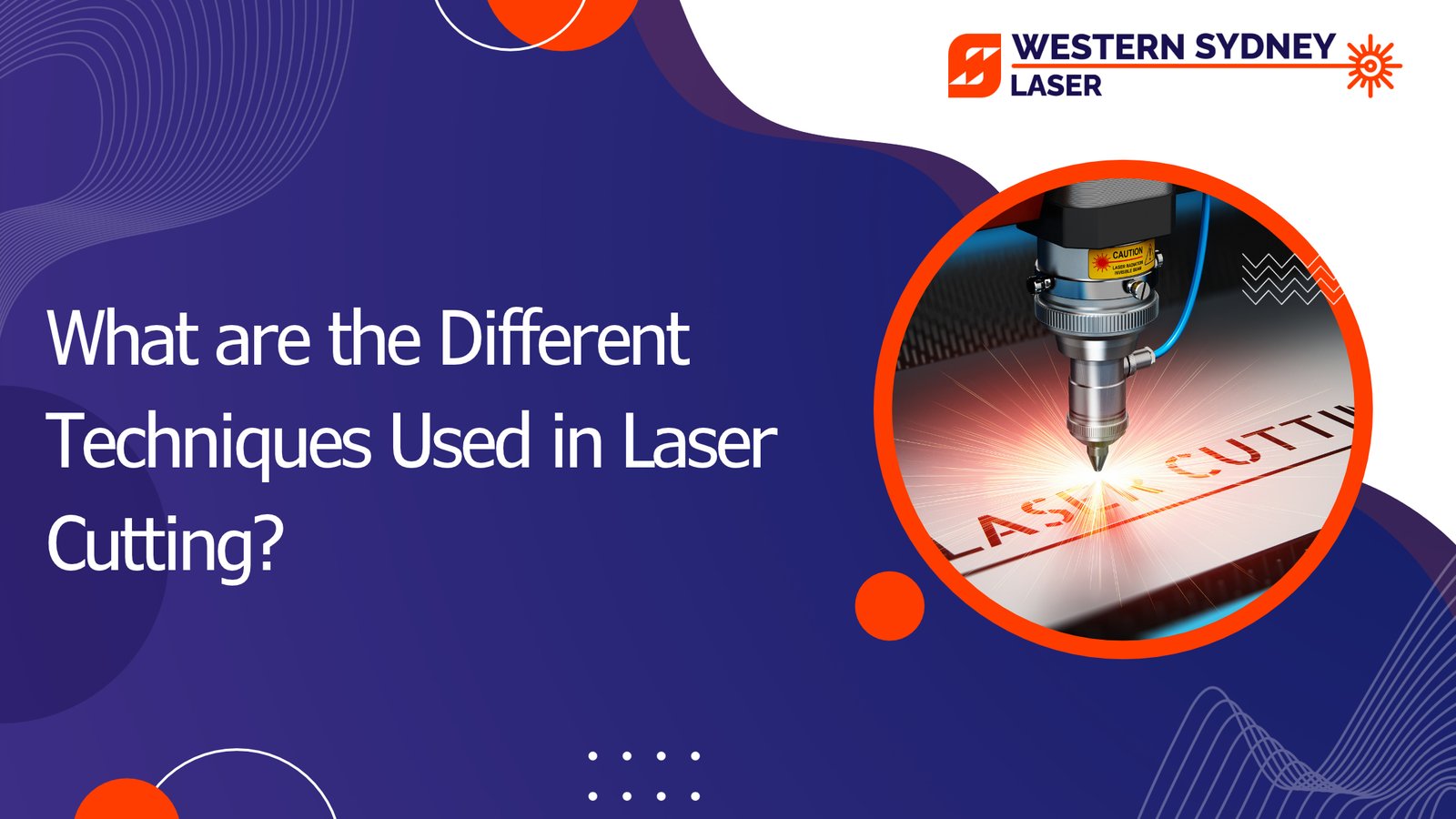
A high-energy laser beam is used in machining, known as laser cutting, to cut through any material.
It is among the most widely used kinds of industrial cutting operations.
Recently, laser cutters have increased in schools, enterprises, hobby stores, and small workshops.
Any material can be sliced by laser cutting, regardless of physical characteristics.
Different Types of Laser Cutting Processes
One flexible and adaptable manufacturing method that may be adjusted to suit various uses is laser cutting.
1. Fusion Laser Cutting
A laser cutter’s default mode of operation is laser fusion cutting.
A high-intensity laser beam provides a lot of heat to a tiny region of the workpiece to melt the metal.
At this stage, an inert gas jet (argon, helium, or nitrogen) blows the molten metal away.
2. Remote Laser Cutting
A sublimation-based manufacturing technique called remote laser cutting vaporizes metal without requiring a gas jet.
Remote-cutting machines are mainly limited to thin metal sheets since they lack a gas jet that can help in material removal.
3. Laser Cutting for Controlled Fractures
Thermal pressures are applied to fragile materials using controlled fracture laser cutting equipment.
It does not require a coolant to start cracks, unlike ZWLC.
Sometimes, a mechanical shock will be necessary to separate the material into two sides.
Using carbon dioxide (CO2) lasers to heat the material, standard controlled fracture laser cutters cause the material to expand and create compressive stress.
Tensile stress is reached when the heater material compresses during cooling.
4. Laser Cutting with Zero Width
To create microcracks, Zero Width Laser Cutting (ZWLC) uses fiber lasers (controlled bursts) in combination with a cooling jet (coolant or water) to develop internal thermal strains in the material.
With no material loss, these carefully regulated microcracks break the material apart along the desired scribe line (zero-width).
Microcracks are caused by variations in a material’s expansion rate.
Glass and other materials can be heated just enough to start thermal expansion using zero-width.
The following cooling jet cools the glass, producing a gradient between the hottest and most excellent areas and high internal thermal tensile stresses.
Conclusion
For a variety of purposes, laser cutting uses a variety of processes to provide accurate results.
Techniques include vaporization cutting, which turns material straight into vapor and is perfect for wood and plastics; thermal stress cracking, which takes advantage of thermal expansion in brittle materials like glass; and fusion cutting, which blows molten material away by gas and is often used for metals.
To sum up, Western Sydney Laser Cut is a leader in precision laser cutting, offering customized solutions for various sectors.
Using innovative techniques and cutting-edge technology, they guarantee complex, high-quality, and effective results that satisfy a range of client demands.