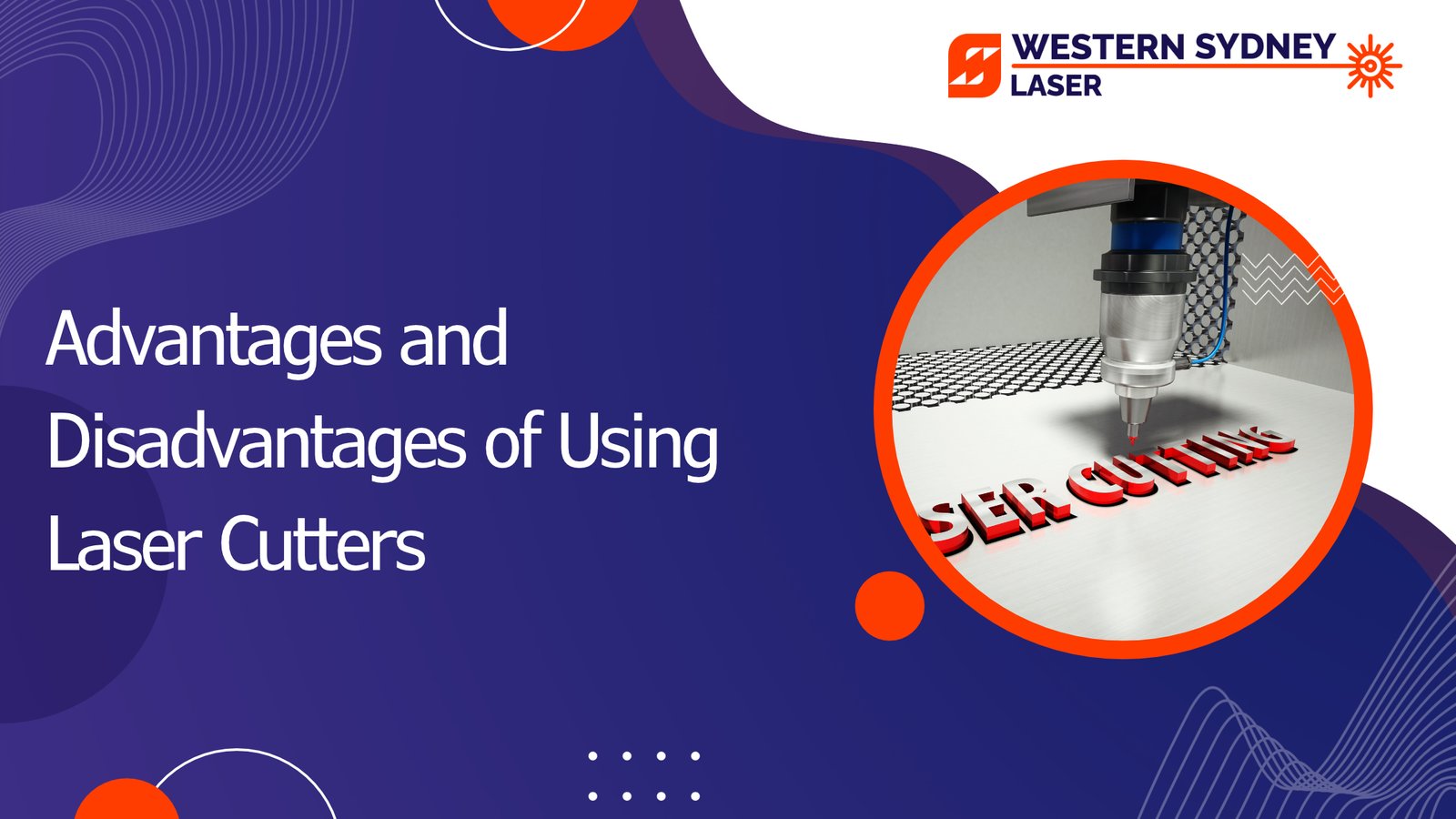
A popular technique in the manufacturing sector, laser cutting is renowned for its capacity to create detailed and accurate cuts in a wide range of materials.
This method produces a precise and clean cut by melting, burning, or vaporising material with a powerful laser beam.
Owing to its effectiveness and adaptability, laser cutting has emerged as a crucial instrument for producers in a number of industries, including electronics, automotive, and aerospace.
So, this article will cover the specific advantages and disadvantages associated with laser cutters.
What is Laser Cutting?
Numerous materials, such as metals, polymers, wood, and more, can be accurately and efficiently sliced with laser cutting.
In order to heat the material to the point of melting, burning, or vaporisation, a powerful laser beam is directed upon it.
Cuts may be made with great accuracy and little waste, considering this concentrated energy.
Advantages of Laser Cutting
In many manufacturing processes, laser-cutting technology is the preferred technique due to its many advantages.
1. Clean and Contactless Method
The cutting tool and the material do not come into physical touch during the non-contact technique of laser cutting.
By doing this, the chance of contamination disappears, and the cutting equipment experiences less wear and tear.
A cleaner cutting process with less material distortion is the end product.
Laser cutting is especially appropriate for treating materials that are delicate or readily distorted because it is non-contact.
2. Reduced Waste
In terms of material usage, laser cutting is quite effective.
Because the cuts are made accurately, less waste is produced, which is good for the environment and the economy.
3. Safety
Safety elements built into laser-cutting machines guard against operator injury.
Because the procedure is automated, less manual intervention is required, which lowers the possibility of mishaps.
Furthermore, adequate ventilation systems and safety enclosures aid in controlling any emissions or fumes generated during cutting.
To continue to ensure operational safety, modern laser cutting machines typically come with interlocking devices and laser protective covers that automatically turn off the laser when the cover is opened.
Disadvantages of Laser Cutters
Although laser cutting technology has many benefits, certain disadvantages should be taken into account as well.
Material Limitations
Not all materials are appropriate for laser cutting.
Although they require more power and specific procedures, contemporary fibre lasers can effectively cut copper and aluminium.
Furthermore, the thickness of the materials that can be sliced is limited.
Generally speaking, laser cutting works better on thinner materials and can be slower and less effective on particularly thick ones.
Conclusion
Laser cutters are perfect for complex designs because of their many benefits, which include accurate cuts, economical material use, and versatility.
Western Sydney Laser Cut distinguishes itself by providing superior laser-cut sheet metal solutions while guaranteeing precision, minimal waste, and economical maintenance.
Nevertheless, there are certain disadvantages to laser cutting, such as increased setup expenses and certain restrictions on thicker materials.
Despite this, Western Sydney Laser Cut is still a great option because it combines knowledge and modern technology to satisfy a variety of project needs.
When you work with them, you can expect dependable, market-leading laser cutting, customized assistance, and high-quality products.