An accurate and effective technique for cutting, engraving, and branding materials, CO2 laser cutting is used in many different sectors.
This method cuts through or etches materials like metal, plastic, wood, and ceramics using a powerful laser beam, usually produced by a CO2 gas laser.
Depending on the power and kind of material, the laser is focused onto its surface using mirrors or fiber optics, where it either melts, burns, or evaporates the substance.
CO2 lasers are renowned for their exceptional cutting accuracy and capacity to produce complex patterns.
Fast production rates, less material waste, and the capacity to create smooth, high-quality cuts are just a few benefits of this method.
Consequently, CO2 laser cutting finds extensive application in the automobile, aerospace, and manufacturing sectors.
What is CO2 Laser Cutting?
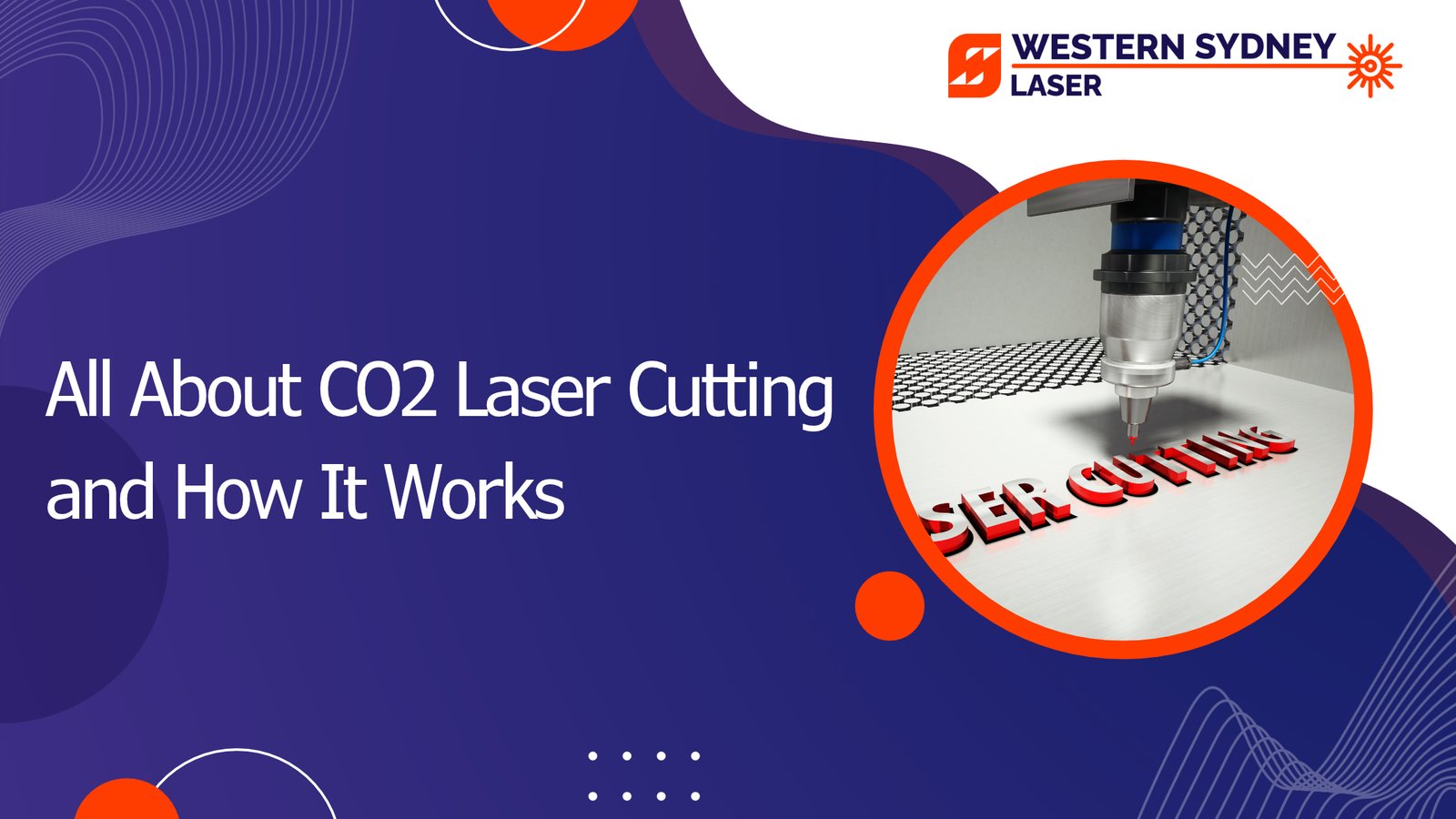
A high-intensity light is used by CNC laser cutting equipment to vaporize material from a workpiece precisely.
In order to satisfy design specifications, laser cutters may also precisely cut slots and bore holes in materials.
The way a CO2 laser cutter also called a carbon dioxide laser, generates and directs the laser to the workpiece sets it apart from other forms of CNC laser cutting.
Using energy and a gas combination that contains carbon dioxide, it produces intense infrared light.
How Does a CO2 Laser Cutter Work?
In a CO2 laser, the beam is created inside an airtight glass discharge tube that has mirrors on either end and is filled with a mixture of gases.
To excite the gas molecules until they produce light, a high electrical voltage is applied through the sealed tube.
The gas’s light-emitting molecules are carbon dioxide, but the gas mixture also needs to contain nitrogen and helium.
Because of its relatively easy transmission through the atmosphere, the carbon dioxide laser’s infrared light wavelength can better sustain intensity as it moves through the atmosphere.
One fully reflective and one partially reflective mirror is located on either end of the discharge tube.
Together, they focus the discharge tube’s light into a beam that travels through the partially reflective mirror.
The laser beam focuses on a high-intensity, narrow beam that is pointed at the workpiece by the laser head.
Conclusion
The innovative technique known as CO2 laser cutting efficiently and precisely cuts, engraves, or etches a wide range of materials using a powerful laser beam.
In order to create a clean cut, it directs a concentrated beam of CO2 gas onto the surface of the material, where the heat causes the substance to melt, burn, or vaporize.
The ability of this technology to create complex cuts and elaborate designs with little waste makes it popular in industries including manufacturing, automotive, and signage.
For companies in need of accurate, high-quality laser cutting services, Western Sydney Laser Cut offers innovative solutions that satisfy a range of project specifications, ensuring excellent outcomes and client satisfaction.